Less Waste. More Worth. The Sustainable Truth About Leather
FJackets men's leather jackets and women's leather jackets give new life to meat industry by-products, transforming them into lasting style you can feel good about style built to handle everything from crisp Canadian autumns to harsh prairie winters. We are committed to crafting premium outerwear that is made to endure, with a deep respect for the planet.
Leather as a By-Product: Reducing Global Waste

Most people don’t realize it, but genuine leather is actually a highly effective way to reduce global waste. Livestock like cows, sheep, and goats are primarily raised for the food and dairy industries. Their hides, however, are often left behind. Without the leather industry stepping in to upcycle these materials, millions of tons of hides would be dumped into landfills every single year.
At FJackets, we believe in utilizing what nature provides responsibly. By turning these natural by-products into high-quality outerwear, we actively help reduce agricultural waste while honouring the full value of the animal. It’s our way of supporting a thoughtful, circular economy where quality always comes first.
Crafting a Leather Jacket That Lasts

True sustainability starts with longevity. Fast fashion contributes to overflowing landfills, but a well-made leather jacket is an investment designed to last for decades through twenty Canadian winters and counting. When you buy outerwear built to endure, you consume less over time, making a conscious choice for a better environment.
Our skilled artisans transform each ethically sourced hide into a timeless wardrobe staple using traditional crafting techniques passed down through generations. This meticulous care ensures every piece is highly durable, resisting the wear and tear that quickly destroys lesser garments. A genuine leather jacket doesn't just last; it develops a unique patina, telling a beautiful story worth wearing.
Real vs. Faux Leather: The Environmental Reality

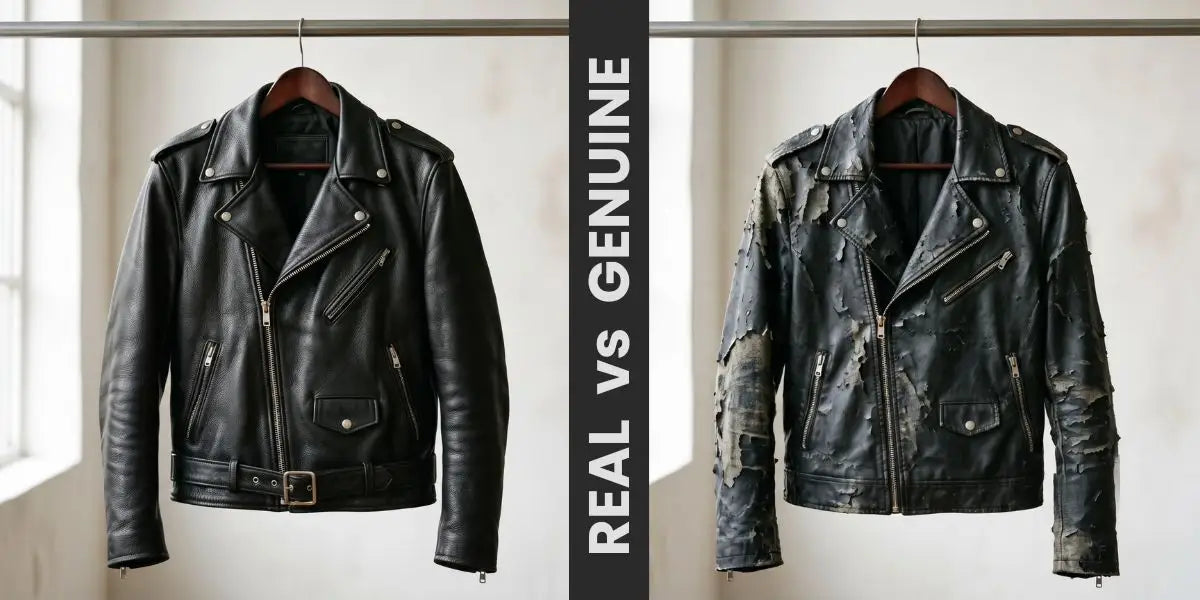
There is a common misconception that synthetic materials are inherently better for the earth. At FJackets, we strictly avoid synthetics. Real leather is a natural material that is highly durable, breathable, and biodegradable when responsibly tanned.
Faux leather (often marketed as vegan or PU leather) might sound eco-friendly, but it is predominantly manufactured from petroleum-based plastics like polyurethane or PVC. These synthetic materials pollute our oceans, release harmful microplastics, and sit in landfills for centuries without breaking down. We choose real leather because it aligns with our goal of creating high-quality garments with the planet in mind.
Planet-Friendly Packaging Solutions

Our commitment to the environment doesn't stop at the garments themselves; it extends to how they arrive at your door anywhere in Canada, from Victoria to St. John’s. We have proudly retired single-use plastic poly-bags from our shipping process.
Today, every jacket ships in a sturdy, 100% recyclable kraft box. Printed with eco-friendly water-based inks, our sustainable packaging is purpose-built to protect both your new leather jacket and the environment.
Ethical Sourcing and Our Commitment

At FJackets, we strictly utilize leather that is a direct by-product of the meat industry nothing more. We carefully partner with trusted suppliers who adhere to stringent animal welfare standards and responsible, traceable farming practices.
Sustainability isn’t just a checkbox for us; it’s an ongoing commitment deeply rooted in our core values. As environmental science and manufacturing methods evolve, we are continuously working to reduce our ecological footprint, improve our processes, and do better for the earth and our community.