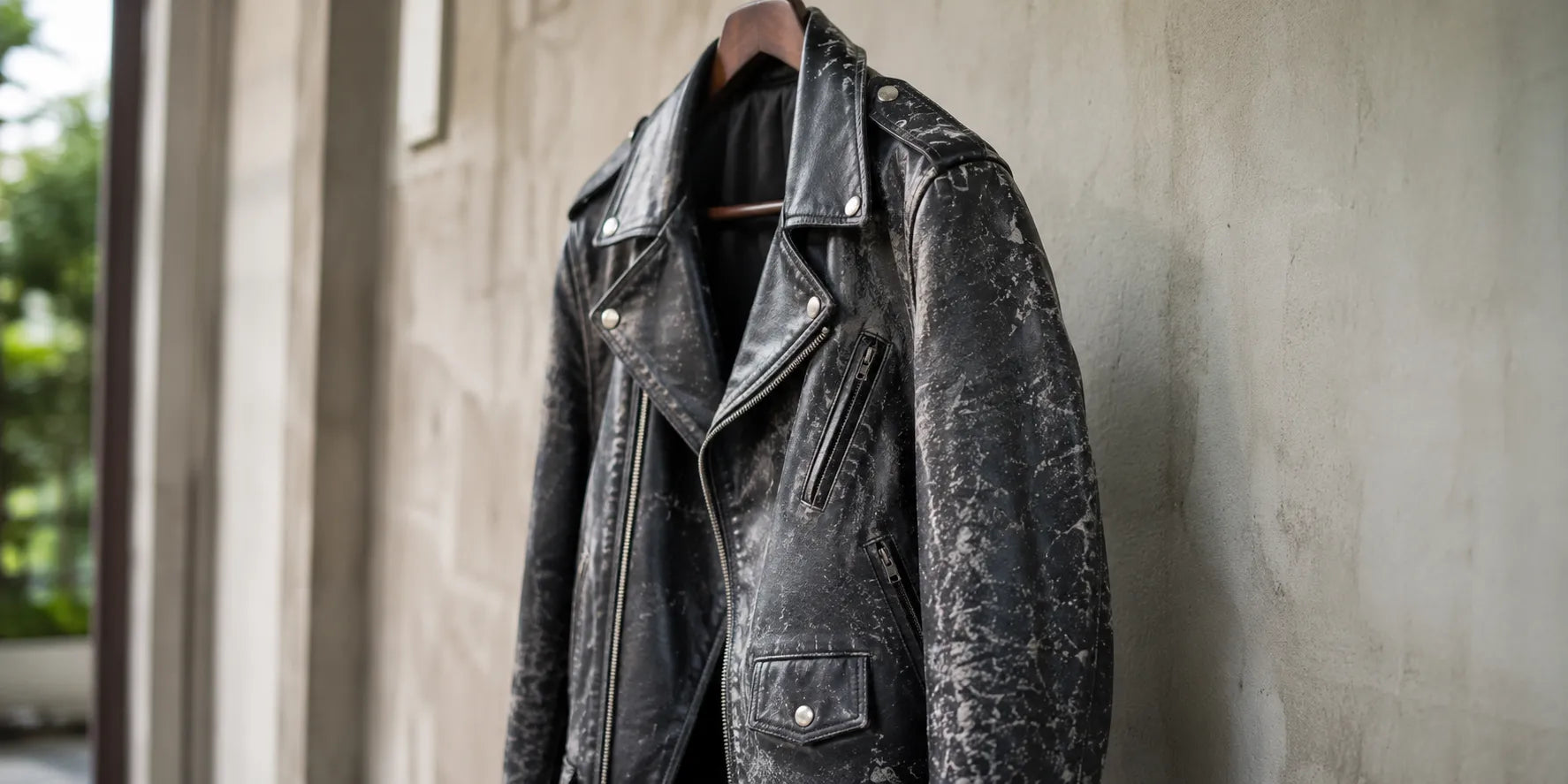
How to Save a Wet Leather Jacket
Your leather jacket got soaked caught in a Vancouver downpour or a slushy Toronto snowstorm. Now what you do in the next hour decides whether it lives. Real leather can survive water, but only if you handle it right while it's still wet. Here's the urgent, no-fluff playbook.

Quick Answer
Get the jacket off, blot (don't rub) excess water with a clean dry towel, hang it on a wide padded hanger, and let it air-dry slowly at room temperature away from heat and direct sunlight. Once fully dry usually 24 to 48 hours apply a small amount of leather conditioner to restore the oils the water stripped. Never use a hair dryer, radiator, clothes dryer, or sunlight to speed it up. That's where most jackets get killed.
The First 30 Minutes

Move fast but gently:
- Take it off. The longer water sits in the leather, the deeper it soaks.
- Empty the pockets. Wet contents add weight and trap moisture.
- Blot with a clean dry towel. Press firmly across the surface. Do not rub rubbing pushes water deeper and can scuff the finish.
- Hang it correctly. Use a wide, padded hanger so the shoulders don't deform. Skinny wire hangers will leave permanent dents.
- Move it to a dry, well-ventilated room. Room temperature, away from windows, radiators, and heating vents.
Drying It Right (Next 12–48 Hours)

Real leather has to dry slowly to avoid shrinking, warping, and cracking:
- Keep it on the wide hanger. Open the front zip and any inner pockets so air can circulate inside.
- Reshape it gently. Smooth lapels, cuffs, and collar back to their natural lines while damp.
- Run a fan in the room if you can. Cool moving air speeds drying without damaging the leather.
- Check it every few hours. If you spot puckering or warping, gently smooth it out with your hands.
- Do not move it until it's fully dry. Most jackets need 24 to 48 hours depending on how soaked they were.
Conditioning After Drying

Water doesn't just soak leather it strips its natural oils. Without conditioning, the leather can dry out, stiffen, and crack at flex points and Canada's dry indoor winter heating makes this worse. Once the jacket is fully dry:
- Apply a small amount of quality leather conditioner to a soft, clean cloth.
- Work it in with light circular motions across the surface, focusing on areas that took the most water.
- Wipe off any excess with a separate dry cloth.
- Let the jacket rest for several hours before wearing.
If the leather is still feeling stiff after one round of conditioning, our guide to softening leather the right way covers what to do next.
What NOT to Do
The fastest ways to permanently ruin a wet leather jacket:
- Don't use a hair dryer. Heat shrinks leather and cracks the finish.
- Don't put it on a radiator or near a baseboard heater. Same outcome uneven shrinkage and warping.
- Don't put it in a clothes dryer. Ever. Heat plus tumbling is the most reliable way to destroy a leather jacket.
- Don't dry it in direct sunlight. UV fades the dye and dries the leather unevenly.
- Don't fold it while wet. The creases set in and become permanent.
- Don't apply conditioner while it's still damp. Conditioner needs dry leather to absorb properly.
If the Damage Is Already Done
If your jacket dried badly and is now stiff, warped, or showing water spots, you may still be able to recover it:
- Stiffness: condition it lightly twice over a week. Movement and conditioning together usually loosen it back up.
- Water spots: evenly dampen the entire panel with a barely-damp cloth, then dry slowly and condition. Often blends the marks out.
- Warped panels or set-in wrinkles: gentle steam at a distance and slow reshaping usually recovers them.
- Mildew or musty smell: air the jacket out for several hours in a shaded, well-ventilated spot.
- Heavy damage or peeling finish: a leather-specialist dry cleaner is your best bet. Our leather peeling guide sets expectations on what's salvageable.
Quick Prevention Tips
- Apply a leather-safe water-repellent spray once or twice a year ideally before the fall rain and slush season.
- Avoid wearing it in heavy rain or wet snow when you have alternatives.
- Keep a microfibre cloth in your bag for quick wipe-downs after a surprise shower.
- Condition the jacket two to three times a year as standard maintenance.
Where to Go From Here
If your jacket didn't make it through the rain or never had the quality to handle a soaking it might be time for a real leather replacement. Browse men's leather jackets or women's leather jackets for full-grain and top-grain options that can handle real Canadian weather free shipping across Canada.
Final Thoughts
A real leather jacket and water aren't enemies heat is. Get it dry slowly, condition it once it's dry, and skip every shortcut. Done right, a soaked leather jacket comes back almost exactly as it was. Done wrong, it doesn't come back at all.
Frequently Asked Questions
Can a leather jacket be ruined by getting wet?
How long does a wet leather jacket take to dry?
Can I waterproof a leather jacket?
Should I condition a leather jacket every time it gets wet?
What if my leather jacket already has water spots?
Can my dry cleaner save a wet leather jacket?